
Axis Communications: Resilient Cybersecurity for Distribution and Logistics – Today and Tomorrow
2025 PREMIER PARTNER ADVERTORIAL
Any company involved in distribution and logistics – whether in freight forwarding, retail, or the chemical industry – has witnessed significant transformation in these sectors in recent years, driven by advancing digitalization. Individual processes have been partially or fully automated, supply chains have become more efficient and transparent, and data-driven analyses reveal where further optimization potential lies within goods flows and value chains.
In many cases, digital transformation leads to tangible competitive advantages: Fast shipping times are a key differentiator in e-commerce and online retail, while in manufacturing and industrial sectors, cost-effective “just-in-time” production becomes easier to implement. The transport of sensitive, safety-critical, or hazardous goods – such as IT components – can also be secured more reliably.
However, digital transformation also brings new risks in the form of cyber threats. As logistics and distribution processes become increasingly digitized, the attack surface for cyberattacks expands. These risks range from data or goods loss and theft to local disruptions such as the failure of a sorting system or interruption of a cold chain, and even large-scale system outages that can cause operational downtime and significant economic damage.
In highly regulated sectors like the chemical industry or medical technology, strict legal and compliance requirements add further complexity. Non-compliance can result in legal, financial, and reputational harm. Ultimately, all industries and sectors that manage complex logistics processes or operate their own distribution networks should recognize that these systems are increasingly viewed by regulators as critical infrastructure – and must be protected accordingly.
This is especially evident in two upcoming European Union directives: NIS2 and the Cyber Resilience Act (CRA). NIS2 aims to improve cybersecurity across EU member states and targets essential and critical organizations whose disruption could negatively impact society. This includes not only telecom providers and energy producers but also companies involved in logistics and distribution chains. The CRA introduces a legal framework to enhance the security of digital products and their software components. It particularly affects connected devices that play a central role in logistics – such as IoT-based sensors, tracking systems, and automated infrastructure.
Securing the Security Solutions
Reliable protection of logistics and distribution processes from cyber threats – and the development of a secure, holistic, and sustainably resilient IT and network architecture – is a medium- and long-term necessity for every logistics company. Crucially, the devices, applications, and processes designed to safeguard the overall system must themselves be protected.
Modern security solutions like network cameras or speakers are increasingly not just part of a company’s physical security infrastructure but also integral to operational logistics management. This means they are often embedded in core enterprise systems – such as ERP (Enterprise Resource Planning) systems for digital management of operational processes like goods flow, inventory, and personnel, and OT (Operational Technology) infrastructures responsible for monitoring and controlling physical industrial processes.
This deep integration opens up numerous opportunities to further optimize and automate logistics workflows. However, it also means that network security technology itself can become a gateway for security risks. For example, in a highly connected system, an attacker could exploit a vulnerability in the security architecture to gain access to IT or even OT resources in Industry 4.0 or 5.0 environments. This risk is especially pronounced when IoT-enabled devices or components are poorly manufactured or designed with cost as the primary consideration.
Looking Beyond Cost
When companies – especially in logistics – plan to invest in security technologies, the choice of system components should not be driven solely by price. Instead, it’s essential to ensure that solutions can be operated securely, scalably, and in compliance with regulations over the long term. Key factors to consider include update capability, vulnerability management, product liability, and seamless integration into logistics processes. Moreover, in light of directives like NIS2 and CRA, it’s clear that security solutions must not only be technically robust but also meet increasing regulatory demands.
To build a resilient security infrastructure, organizations should consider not just the financial aspect but also the following three criteria: the technological quality and performance of the solution, the long-term availability of technical support including regular and guaranteed firmware updates, and the ability of the provider to integrate their solutions seamlessly into existing enterprise systems.
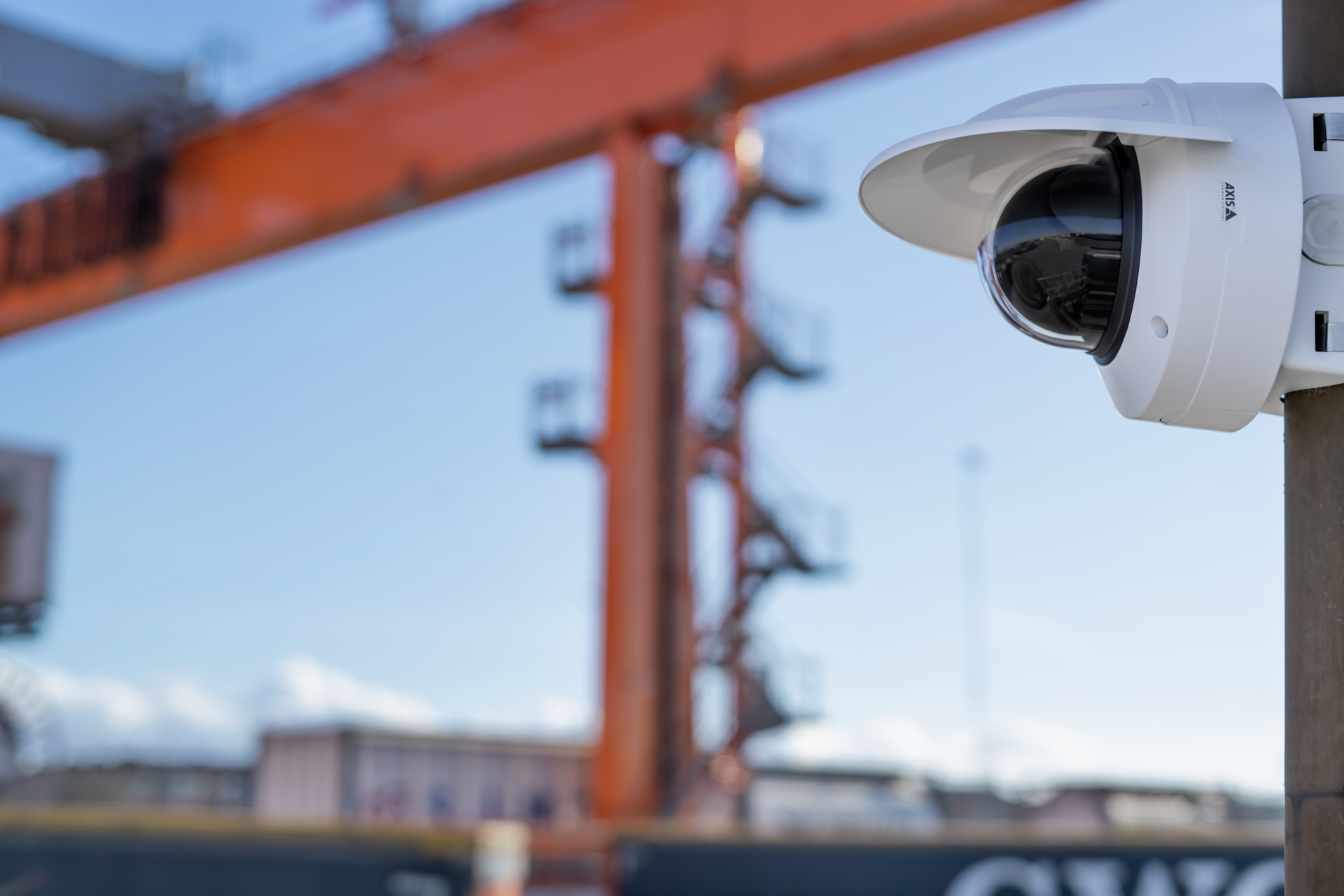
Technological Excellence for Today and Tomorrow
A security system must not only perform according to today’s standards but also be capable of meeting the technological demands of tomorrow. This includes having sufficient processing power to reliably support new functions, analytics, or interfaces over many years. With these requirements in mind, Axis Communications introduced the ninth generation of its System-on-Chip (SoC) for network video solutions in 2024: ARTPEC-9.
The ARTPEC-9 chip stands out for its high-quality image processing, enhanced cybersecurity, improved capabilities for AI-based video analytics using deep learning at the edge, and an exceptionally low bitrate. It also marks a milestone in video security by supporting the AV1 video codec from the Alliance for Open Media (AOM) for the first time. AV1 is an open-source video compression standard known for its highly efficient data compression. Unlike proprietary codecs, AV1 eliminates licensing fees, which offers significant cost advantages – especially when deploying large-scale camera networks and planning for long-term scalability.
The chipset was developed in-house by Axis and adheres to the principle of Security by Design, giving Axis full control over the manufacturing process and device security. A key focus during development was ensuring that the full performance capacity of ARTPEC-9 would not be fully utilized at launch. Its architecture is designed to accommodate future customer demands – such as higher image resolutions, more complex video analytics, or increased computational loads – without compromising performance. This approach ensures that Axis systems remain technologically future-proof and evolve into resilient, sustainable solutions that support the long-term security and business strategies of enterprises.
Continuous Technical Support
Another key pillar of long-term resilience is the continuous availability of technical support throughout the entire lifecycle of security solutions. For example, digital (security) certificates must be renewed regularly – sometimes every two years – and firmware must be kept up to date through updates, while potential vulnerabilities must be proactively identified and resolved.
To achieve this, providers must reliably and sustainably offer the necessary certificates, firmware updates, security patches, and the supporting processes and infrastructure. Only then can an organization be confident that the security solution it has invested in will remain stable, secure, and compliant with legal and regulatory requirements in the future.
To meet these cybersecurity demands, Axis combines state-of-the-art security standards with Long Term Support (LTS) and guaranteed firmware updates for up to 15 years. The LTS track – one of three support options within the lifecycle of Axis’s proprietary operating system AXIS OS – is designed for customers who prioritize maximum stability and security and intentionally opt out of regular feature updates. It focuses on reliable system maintenance with minimal changes. In contrast, the Active Track continuously delivers new features and updates. Axis also ensures documented vulnerability detection and remediation within its firmware. Additionally, Axis operates a bug bounty program that actively involves independent security researchers in the early identification and resolution of potential vulnerabilities.
With Axis Edge Vault, Axis has developed an integrated, hardware-based cybersecurity platform that protects its network devices from unauthorized access. The platform includes a FIPS 140-2 Level 2 certified Trusted Platform Module (TPM) for secure storage and management of cryptographic keys and digital certificates, as well as advanced security features such as signed firmware and secure boot.
AXIS Device Manager is another powerful tool that enables centralized management of all network devices and security profiles within the system – automated, scalable, and with minimal manual effort. Firmware updates, certificate renewals, and password changes can be executed with just a few clicks.
Vision Beyond Traditional Security Functions
Security solutions today – and in the future – must be more than passive observers. As integral and active components of critical business processes, they provide a reliable technological foundation for operations that must run consistently, securely, and efficiently, especially within ERP, OT, or IoT system landscapes. For instance, when security cameras in logistics centers detect that machinery has stopped or individuals have entered hazardous zones, automated responses can be triggered.
To enable this, such systems must be intelligently networked and integrated, high-performing, and operable over the long term. Axis embraces precisely this approach with its solutions: a vision that goes beyond traditional security functions. Axis solutions are designed from the outset not only to protect but also to stabilize operational processes, maintain efficiency, and thereby ensure business continuity and resilience.

Conclusion
Anyone in the sectors of distribution and logistics investing in new security technologies today – whether driven by regulatory requirements or by the desire to prevent goods losses and operational disruptions – should focus on long-term viability, system stability, IT security, and resilience against future challenges. Axis offers not only technological excellence but also strategic foresight and a holistic security approach that meets both technological and regulatory demands. Solutions that are ready and built to adapt to future developments, providing true investment security.
Author & Company profile
Marcel Hamp has been with Axis Communications since 2018 and is responsible for B2B sales in the DACH region as Key Account Manager. He supports clients in the industrial, manufacturing, production, and logistics sectors, helping them develop efficient and future-proof security infrastructures. With over 20 years of experience in smart manufacturing and physical security, he combines deep technical expertise with strong sales acumen.
Axis Communications, founded in 1984 and headquartered in Lund, Sweden, is a global leader in network technology, offering innovative video surveillance, access control, intercom, and audio solutions enhanced by intelligent analytics and strong partner collaboration.
Contact:
Axis Communications GmbH
Marcel Hamp
Adalperostr. 86
85737 Ismaning
Tel: +49 89 35 88 17 0
E-Mail: marcel.hamp@axis.com
Web: www.axis.com