United Kingdom Politicians Urged to Support a New Nationwide Freight Crime Bill
Concerns over the number and impact of criminal attacks on supply chains will be brought to the attention of British Members of Parliament on 12 September 2025 when a proposed new Freight Crime Bill gets is second reading in the UK’s House of Commons.
As well as raising awareness of the issue, more importantly the Bill is calling for a separate crime code for freight thefts as opposed to them “being lumped together with domestic car break-ins and other car crime,” said MP Rachel Taylor when she first presented the Bill in March.
Addressing MPs earlier in the year, she said: “Too many people think theft from a van or lorry is low-level opportunistic crime; this is not true. Freight crime is committed by organised criminal gangs. It is dangerous, and it has cost the UK economy £1 billion since 2020. More action is urgently needed… the challenge of freight crime must be tackled if we are to achieve our mission of economic growth.”
The campaign is definitely gaining in momentum, and most businesses manufacturing or transporting goods in the UK would argue it needs to.
An ‘unacceptable rise’ in thefts
As Chair of the All-Party Parliamentary Group (APPG) on Freight & Logistics, Rachel Taylor clearly reflects the views of many other parliamentarians across the UK who are seeing businesses and consumers being affected by this increasing type of crime. Writing in the Group’s ‘Securing Our Supply Chains’ report last November, she stated: “An unacceptable rise in the level of thefts has marred the haulage industry and had ripple effects for the rest of the economy. Tackling freight crime head-on would improve the welfare of drivers, encourage new entrants into the workforce, prevent significant financial losses to businesses, and improve confidence in the wider sector.
“The true cost of freight crime is not only the value of goods stolen; it places the logistics industry under immense pressure, affecting companies’ viability, staff retention, and losing contracts and investment in the UK as investors shy away due to the lack of supply chain security.”
The report published a list of recommendations for the UK Government to consider:
- Endorse and support secure parking standards: Drivers today cannot be assured of their own safety or that of their vehicle, even when in designated parking. Coordinated standards must be used to create an environment where drivers can pull into any truck stop with the confidence they deserve.
- Ensure planned reform to the National Planning Policy Framework considers the needs of hauliers:Reforms to the planning system must reflect the critical nature of supply chain security.
- Launch a national parking programme: There is a national shortage of lorry parking which forces many drivers to park overnight at unlit, unpopulated and vulnerable roadside facilities. Central government needs to work closely with local authorities to increase the provision of much-needed parking facilities.
- Increase support and resources for law enforcement: Our police forces do not currently have the tools and support to stem the rise of freight crime. Whilst other measures will help, there is no short cut that can replace better enforcement.
- Launch a national freight crime awareness campaign: To act as a visual deterrence to criminals who see freight as an easy target.
These are all extremely welcome initiatives and ones UK MPs are being urged to support.
“Freight crime disrupts supply chains, damages businesses, drives up prices, and affects manufacturers, retailers, and ultimately, consumers. It’s a low-risk, high-reward crime, perpetrated by organised gangs so we need to change that dynamic which is why we’re calling for stiffer sentences and the creation of a specific freight crime offence. I urge everyone in our industry to back this vital campaign… to call on their MP to get behind these measures that will help protect drivers and businesses and dismantle the criminal networks who are committing these crimes,” said Declan Pang, Policy Director at RHA (Road haulage Association).
Criminal interference in the haulage sector
The need to tackle the involvement of organised crime groups in the transport sector in the UK was also on the agenda at TAPA EMEA’s Annual Conference in April when delegates heard from Kat Henn, Senior Intelligence Manager, UK Home Office Intelligence, on a campaign with Dutch law enforcement to tackle criminal interference within the haulage and logistics sector.
If you’re a supply chain security professional who is concerned about the safety and security of your people, assets, and customer cargos in the UK, it all sounds extremely positive. But, as Rachel Taylor is keen to impress on her fellow MPs, “While reassuring words are a positive sign, we must campaign until we see material change on the ground.”
And this aligns perfectly with TAPA EMEA’s thinking; action speaks louder than words.
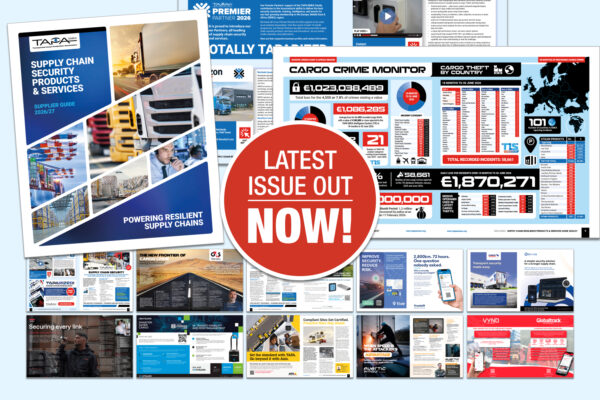
In the last 2 years to 30 June 2025, the TAPA EMEA Intelligence System (TIS) has received reports of 5,341 thefts or attempted thefts from supply chains in the UK, causing over €57 million of losses for the 11% of crimes sharing a loss value. Major incidents (involving goods with €100K or more) produced an average loss of €569,109.
So, plenty to focus on for TAPA EMEA’s new United Kingdom Regional Lead, Harry Hughes, who has taken on this voluntary role to support the Association and its members alongside his day job as Managing Director on long-time TAPA EMEA member, FET Logistics.
He is a strong advocate of TAPA EMEA’s mission – and keen to do more.
Harry says: “Over the past three years I’ve had the privilege of representing TAPA EMEA at several events across the UK and Europe, and I’ve genuinely enjoyed stepping out of my comfort zone to do it. That exposure has only strengthened my belief in the value TAPA brings to the logistics and supply chain world. In the last 3-4 years, focusing more on compliance and regulatory matters, I’ve started to see more ways I can help share the TAPA message and strengthen engagement across the UK. That’s what motivates me in this role, to help drive awareness, collaboration, and real improvements wherever I can.”
A new UK Working Group
One of his first goals is to establish a UK Working Group to bring together TAPA EMEA member representatives from across the country to openly share their experiences, known risks, challenges, and ideas to counter the threat of cargo crime.
“I’ve already had some great conversations with insurers, major freight forwarders, and manufacturers, and there’s a real appetite for this kind of engagement. If we can get the right people round the table, we can start addressing shared problems regionally within the UK rather than everyone working in silos. The long-term plan is to use this collaboration as a springboard for a UK Regional Conference, hopefully alongside other key trade associations such as Logistics UK and the RHA, to build stronger, joined-up approaches to tackling the issues we all face,” he added. “With the support of these trade bodies, we can be part of the campaign to encourage the UK government to take cargo crime more seriously and address some of the long-standing security challenges in our sector.”
One of these biggest concerns in the UK – reflecting what TAPA EMEA sees across Europe – is the ongoing lack of a sufficient high-security parking infrastructure. “While a lot of the Partner Level parking areas being approved by Parking Place Operators (PPOs) are secure and well-managed, there’s still a glaring gap when it comes to truly high-security, certified parking. The UK currently has no certified Level 1, 2 or 3 secure parking sites under TAPA’s Parking Security Requirements (PSR) programme,” he said.
In line with the thinking behind the Freight Crime Bill, he also highlights the need for more and accurate cargo crime incident information to be recorded and shared with industry stakeholders. “Even taking into account that a lot of incidents are reported into bigger and more general crime categories, we still know there’s a lot of crime data out there that just isn’t being shared, and that’s a real issue. Whether it’s insurers, operators, manufacturers or others in the supply chain, too many companies are still holding back, often because they’re worried about reputational risk or commercial sensitivity.
“Again, one of our goals is to raise awareness that cargo crime intelligence can be shared with TAPA EMEA anonymously. We need companies to understand that sharing data with our TIS platform is a secure way to contribute information which mitigates risks at an industry level without any identification of the companies which have been targeted.”
TAPA EMEA will also look to support and work alongside other groups in the UK which are ‘on the same page’ when it comes to reducing the impact of cargo crime, he said.
“We recognise that there are other organisations in the UK working towards similar goals as TAPA EMEA. There’s definitely room for more collaboration because joining forces makes sense and will improve visibility, strengthen our industry message, and, ultimately, create more effective outcomes for everyone involved.”
If you’d like to find out more about joining the new UK Working Group, please contact harry@tapaemea.org